


Criminal Case: Mysteries
4.64.84K Reviews
App Specs
- Version
- 2.45.1
- Updated On
- License
- Free
- Downloads
- 5,000,000+
- Developer
- Pretty Simple
- Categories
- Adventure
- Platform
- Android
Screenshots
 Analysis by AppCompare
I approached Criminal Case: Mysteries of the Past! as a decision rather than a quick download: is it the kind of adventure game that rewards careful observation, or is it mainly a light way to pass a few minutes? After spending time with it, my answer is that it works best for players who enjoy investigating scenes, following a case through short sessions, and making progress without needing fast reflexes. It is free to start, but its energy-based rhythm and optional purchases matter when deciding whether it belongs on your phone.
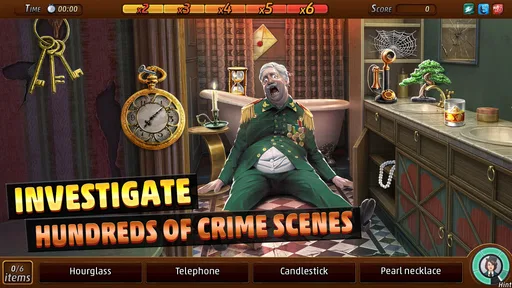
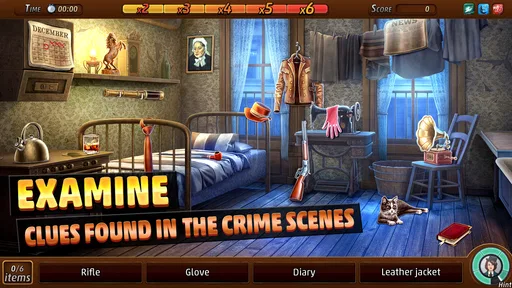
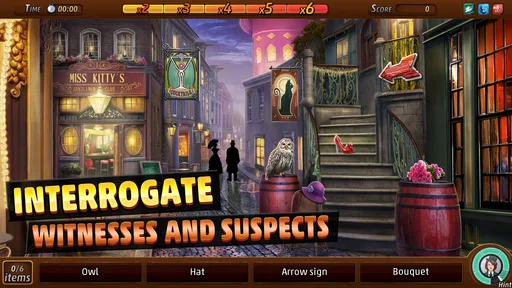
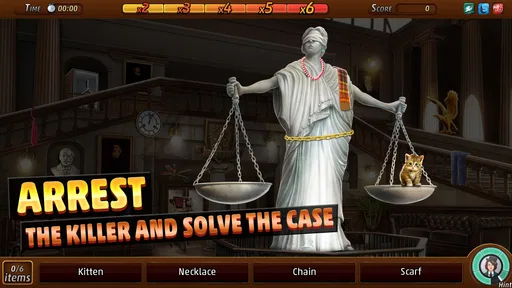
The game comes from Pretty Simple and places you in a series of murder investigations set in a historical world. You search scenes for clues, question people, examine evidence, and connect discoveries through a continuing chain of cases. The central appeal is not complicated controls. It is the small satisfaction of noticing an object that blends into the background, choosing the right investigative action, and seeing another piece of the mystery fall into place.
That makes it a different sort of adventure from an open-world game or a traditional action title. I would not choose it for dramatic combat, deep character control, or unrestricted exploration. I would choose it when I want a guided mystery with clear objectives and a steady sense of progress. The important question is whether you enjoy that focused, repeatable structure.
How to Decide Whether This Mystery Game Fits You
I’d use this section to help you check whether the game’s short, guided investigations match the way you actually like to play, rather than judging it by its mystery theme alone. A useful test is to notice whether scanning for small details feels calming or tedious after a few sessions; that reaction is a better guide to its staying power than the first case’s novelty.
The core loop is simple, but the judgment is in the details
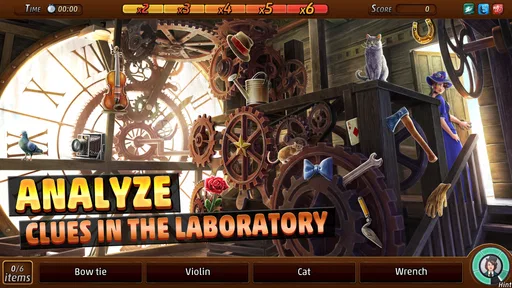
Most of my time with the game revolves around entering an investigation scene and looking for relevant items. The challenge is less about knowing a secret code and more about scanning the screen patiently. Some objects stand out immediately, while others are tucked into clutter or use colors that make them easy to overlook. That creates a pleasant tension: rushing usually makes me miss something, but staring without a plan can make the scene feel slower than it needs to be.
Once a scene is complete, the investigation moves toward analysis, conversations, and further objectives. The structure keeps the story moving in small steps rather than asking me to solve an entire case in one sitting. I like that approach on a phone because it gives each session a clear purpose. I can finish a small task, put the device down, and return later without having to remember a complicated control scheme.
The trade-off is that the repeated search format becomes familiar quickly. If you need constant mechanical variety, this may feel narrow. The game changes the setting and narrative context, but the act of finding objects remains the main activity. For me, that repetition is calming when I am in the right mood and noticeably routine when I am not.
Worth Reading Before You Choose

EA SPORTS FC Mobile 26 Is a Bigger Football Game, but It Takes Time

Flipboard Shows What News Apps Must Do Beyond the Feed

Switching to Android Auto Means Rethinking Your Driving Routine

Google Calendar Makes a Crowded Week Easier to Manage

Ludo King Makes the Most of the Minutes Between Plans

Baby Panda World Brings Quick Play to Modern Phones, but Its Game Library Feels Busy
Story matters more here than action
The historical setting gives the cases a distinct flavor. Instead of feeling like a modern police simulator, the game uses the past as the backdrop for its investigations, which helps the scenes and characters feel separate from everyday crime dramas. I found that the story is most effective when I treated each case as a sequence of clues rather than expecting a fully open detective role-playing experience.
You are guided toward the next task, so there is not much room to ignore the main investigation and invent your own approach. That limitation is useful for players who dislike getting lost, but it can disappoint anyone looking for branching decisions or a mystery that reacts dramatically to every choice. The game gives you the pleasure of uncovering information, not complete freedom to reshape the investigation.
My main decision rule is straightforward: choose it for observation and narrative momentum, not for tactical depth. That distinction prevents a lot of disappointment. It is closer to a playable investigation series than to a demanding puzzle box or a large adventure sandbox.
What the free model feels like in everyday use
The game is free to download and play, which makes it easy to test without committing money at the beginning. Its listed content rating is Teen, so I would still consider the tone before handing it to a younger player. Murder investigations naturally bring darker themes than a completely casual matching game, even though the presentation remains accessible rather than relentlessly grim.
Optional in-app purchases range from $0.99 to $99.99 per item. I would not treat that range as a reason to avoid trying the game, but I would treat it as a reminder to set purchase controls before playing for long periods. The most comfortable way to use a free game with optional spending is to decide in advance whether you are willing to pay for convenience, then avoid making that decision while impatiently waiting for progress.
The energy-style pacing is the biggest practical consideration. Investigating scenes and advancing through a case is not always something I can do continuously. When the available energy runs out, the game naturally encourages a pause or a purchase. That can be helpful if I want a short break, but it interrupts the experience when I am absorbed in a case and want to continue immediately.
Small habits make the search scenes less frustrating
I get better results by scanning each scene in a fixed pattern instead of tapping randomly. I usually move from one edge of the image to the other, then check the center and the areas around larger objects. This sounds basic, but it reduces the chance of repeatedly overlooking the same small item. It also makes the game feel more like observation and less like guessing.
Another useful habit is to pause before spending any limited resource on a scene. If I am missing one clue, I first revisit the whole image at a slower pace. A bright object can be hidden by visual noise, and frantic tapping does not improve recognition. When the game offers help, I prefer to reserve it for the final stubborn item rather than using it at the first sign of difficulty.
I also find it better to play with the screen brightness high enough to distinguish similar colors, especially when a scene contains muted historical backgrounds. That is not a special feature, just a practical adjustment that makes the visual search fairer. On a small phone, rotating the device or enlarging the view where possible can also make tiny objects easier to identify.
Where it wins against familiar alternatives
Compared with action adventures, this game is much easier to pick up. I do not need to learn movement combinations, manage a complicated inventory, or remember a large map. That makes it a good choice for a commute, a waiting room, or a quiet evening when I want interaction without pressure. The cases provide a reason to continue, while the scene searches give me something concrete to do.
Compared with pure hidden-object games, the investigation framing adds more purpose. I am not only clearing pictures; I am working toward a case, meeting characters, and following evidence through a sequence. Players who enjoy hidden-object mechanics but want a stronger narrative wrapper may find this more satisfying than a collection of disconnected scenes.
It also has an advantage over many traditional puzzle games for players who do not enjoy being completely stuck. The objectives generally point me toward the next stage, and progress is broken into manageable actions. The downside is that this guidance reduces the feeling of solving a mystery entirely on my own. If you want to write your own theory and test it against many possible outcomes, a more open detective game would be a better fit.
Where another category may suit you better
I would skip this game if my priority were uninterrupted play. A premium adventure with no energy timer may cost money at the start, but it can offer a smoother long session. I would also look elsewhere if I wanted a mystery built around complex logic puzzles, because the main challenge here is visual searching and progression through investigation tasks.
Players who prefer competitive play should probably choose a different category altogether. There is no reason to approach this as a test of speed against other people. Its pleasure comes from personal progress and story discovery. Likewise, someone seeking a rich role-playing system with character builds, equipment decisions, or strategic combat may find the investigation structure too guided.
The strongest alternative depends on what you want to replace. For a relaxed hidden-object experience, this is a sensible option. For a full-length narrative adventure, a paid story game may offer better continuity. For demanding deduction, a puzzle-focused detective title may provide more satisfying mental work. I would not call one approach universally superior; they simply reward different kinds of attention.
A realistic way to fit it into a day
Imagine having ten minutes before an appointment. I can open the game, finish part of a scene, collect enough progress to move the case forward, and stop without needing a long uninterrupted block. That is where the structure makes sense. The short objectives turn an idle moment into a small investigation rather than asking me to memorize a sprawling plot.
On the other hand, if I have a free evening and want to complete an entire case in one sitting, the pacing can feel restrictive. Energy limits and repeated search scenes may break the momentum. My practical recommendation is to treat it as a recurring short-session game. It works better as something I revisit than as a title I expect to consume like a television episode marathon.
What switching away would mean
Moving from this game to a conventional adventure changes more than the story. I would trade guided progress for more exploration, and simple searching for controls or puzzles that may demand more concentration. That can be worthwhile, but it also removes the low-pressure quality that makes this game convenient.
Switching to a pure hidden-object alternative may preserve the visual search but reduce the feeling that each discovery belongs to a larger investigation. Switching to a premium detective game may remove purchase interruptions, yet it could require a larger initial commitment and more sustained attention. Before changing, I would identify the actual irritation: is it the energy wait, the repeated scene format, or the lack of freedom? Each problem points toward a different alternative.
If the issue is spending pressure, I would first try a no-purchase routine and use the natural pauses as part of the schedule. If the issue is repetition, no amount of patience will transform the core loop into a different genre. In that case, moving to a puzzle-heavy or exploration-focused adventure is the more honest solution.
Performance, access, and who can start playing
The game supports Android devices running version 7.0 or later. That gives it a relatively broad starting point for people using older compatible phones, although the experience will still depend on screen size and general device condition. Search scenes are easier to enjoy on a display where small details remain clear, so the minimum operating-system requirement should not be the only practical consideration.
The current version is 2.45.1, and the game has built a sizeable audience, with over 5 million installs. Its average rating is 4.6 from around 119 thousand ratings, alongside roughly 4.8 thousand written reviews. Those figures suggest strong broad appeal, but they do not remove the personal trade-offs: a popular game can still be wrong for someone who dislikes energy systems or hidden-object repetition.
I would especially recommend trying it for players who enjoy casual detective fiction, visual searches, and progress that can be divided into small tasks. It is also a reasonable choice for someone who wants an adventure game that does not demand quick reactions. I would be more cautious for children because of the Teen rating and for anyone who tends to make impulse purchases when a game pauses their progress.
My recommendation after weighing the trade-offs
I recommend Criminal Case: Mysteries of the Past! if you want a free, story-led hidden-object adventure that is easy to play in short bursts. The historical mystery setting gives the familiar search mechanic a reason to exist, and the guided case structure keeps the next objective understandable. I particularly like it as a phone game for brief sessions, when I want a little investigation rather than a demanding gaming commitment.
I would not recommend it as the first choice for uninterrupted long-form play, deep deduction, competitive action, or complete narrative freedom. The repeated scene searches and energy pacing are not minor details; they define the experience. Try it when those limits sound acceptable, and keep your spending boundary clear before you begin.
For me, the final verdict is positive but specific: this is a comfortable casual adventure, not a substitute for every kind of detective game. If you enjoy noticing details, following a case one step at a time, and returning to a mystery throughout the day, it is worth installing. If you want every clue to come from your own theory or expect constant mechanical novelty, choose a more puzzle-driven or exploration-heavy alternative instead.
Pros
- Engaging hidden-object investigations with varied crime scenes.
- Episodic cases provide a clear sense of progression.
- Distinct locations and characters make each mystery memorable.
- Simple controls work well on both phones and tablets.
- Regular events can add fresh objectives beyond the main cases.
Cons
- Energy limits can interrupt investigations at inconvenient moments.
- Some evidence searches become repetitive over longer sessions.
- Progress may feel slow without spending premium currency.
- The story quality varies between individual cases.
- An internet connection may be required for certain features.
FAQs for Criminal Case: Mysteries
What is Criminal Case: Mysteries about?
Criminal Case: Mysteries is a hidden-object investigation game in which you examine crime scenes, search for clues, question suspects, and help solve mysterious cases. Each investigation combines object-finding challenges with story conversations, evidence analysis, and occasional puzzles. The game is designed for casual play, with a narrative structure that lets you progress through separate cases while uncovering motives, connections, and unexpected twists.
Is Criminal Case: Mysteries free to download and play?
The game can generally be downloaded for free, but it may include optional in-app purchases. These purchases can provide extra energy, hints, resources, or other conveniences that help you progress more quickly. You can usually play without spending money, although waiting for energy to refill or completing scenes with fewer mistakes may be necessary. Check the store listing on your device for the latest pricing and purchase details.
Does Criminal Case: Mysteries require an internet connection?
An internet connection may be needed for certain features, including loading advertisements, synchronizing progress, receiving updates, or accessing online services. Some investigation scenes might work temporarily while offline, but the full experience is not guaranteed without connectivity. If you plan to play during travel or in areas with weak reception, it is best to test offline access first and make sure your progress has synchronized beforehand.
Is Criminal Case: Mysteries suitable for children?
Criminal Case: Mysteries is aimed at players who enjoy detective stories, but parents should review the store age rating before allowing younger children to play. The game focuses on crimes, investigations, suspicious characters, and mystery-themed situations, which may be unsettling for some players. It can also contain advertisements and optional purchases, so parental controls are recommended if children use the device.
What are the main advantages and disadvantages of the game?
The main advantages are its accessible hidden-object gameplay, case-based structure, colorful presentation, and story progression that encourages you to keep investigating. It is easy to understand and works well for short play sessions. On the other hand, energy limits, advertisements, repeated searches, and optional purchases can interrupt the pace. Players who prefer fast action or completely unrestricted gameplay may find the progression somewhat slow.


